Choosing the best home mold test kit can feel overwhelming, especially when different products use different testing methods and provide different types of results. Some kits use petri dishes to check for mold growth, while others collect surface or air samples. Dust-based testing offers another approach by analyzing household dust in a laboratory.
If you are looking for a mold test kit for your home, it is important to understand what each method measures, how samples are analyzed, and what information you will receive. The right choice depends on your goal, budget, and whether you want a preliminary check or more detailed laboratory analysis.
In this guide, we compare popular home mold testing options, explain what to look for in a home mold test kit, and explore how The Dust Test approaches household mold testing.
Why Home Mold Testing Matters
Mold can grow in damp areas, including bathrooms, basements, kitchens, around leaking pipes, and near windows affected by condensation. Sometimes visible growth makes the problem obvious. In other situations, musty odors, past water damage, or recurring moisture may prompt homeowners to investigate further.
A home mold test kit can help you gather information, but not all kits answer the same questions.
Before choosing a mold testing kit, consider what you want to learn:
- Check a specific area: Surface sampling may help determine whether a sampled surface contains mold.
- Sample airborne particles: Air testing can assess what was captured in an air sample at a particular time and location.
- Analyze household dust: Dust-based laboratory testing can identify selected mold species or markers in collected dust, depending on the test.
- Investigate a moisture problem: A kit may provide useful information, but it does not replace investigating leaks, condensation, or other moisture sources.
A test result represents the sample collected and the method used. No single home mold test kit can guarantee that every mold problem in a building has been found.
Comparison of the Best Home Mold Test Kits for 2026
The best option depends on the type of sample you need, how the test is processed, and the detail provided in the final report. Here is a high-level comparison of several home mold testing approaches.
| Mold Test Kit | Type | Pros | Cons |
| The Dust Test | Dust sampling with laboratory analysis | Identifies 36 mold species; household dust collection; PCR-based analysis; personalized reporting | Requires collecting and mailing a dust sample |
| Pro-Lab Mold Test Kit | Depends on the specific kit; may include surface sampling and laboratory analysis | DIY sampling option; some kits offer lab analysis | Coverage and reporting depend on the selected product |
| MyMoldDetective | Air-sampling options, depending on the product | Provides information about a collected air sample | Results reflect sampling conditions at a particular time and location |
| Mold Armor DIY Mold Test Kit | Commonly uses a growth medium to check for mold growth | Basic preliminary DIY check | Growth alone does not establish the full extent or source of a mold problem |
Product contents, availability, and testing services can change, so confirm current package details before purchasing. These options also use different methods, meaning their results should not be treated as directly interchangeable.
The Dust Test — A Modern Approach to Mold Detection

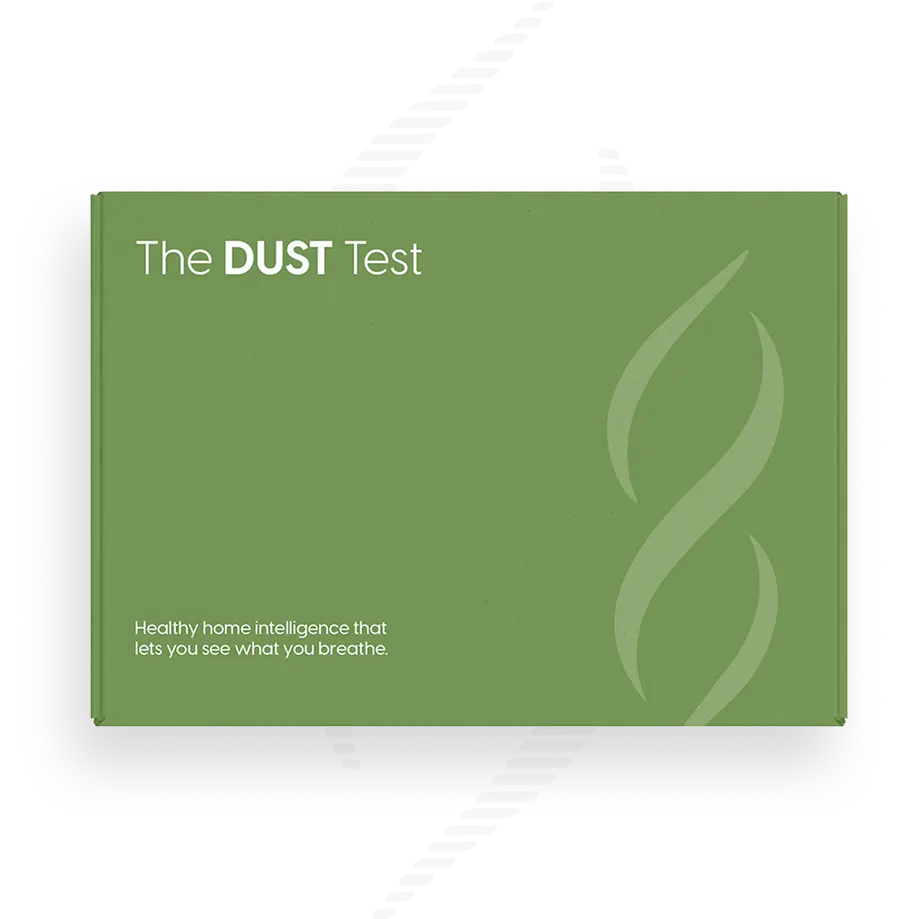
The Dust Test offers a household dust-based approach to mold testing. It uses PCR technology to identify 36 mold species in collected household dust, with laboratory analysis and results delivered through an online portal.
Rather than relying solely on a visible patch or a single air sample, this method examines the selected mold species detected in a dust sample. Its report provides information to help customers understand their findings and consider appropriate next steps.
This approach may be worth considering if you want to learn more about mold species represented in household dust. However, dust analysis does not, by itself, confirm exactly where mold is growing, establish the full extent of a building problem, or diagnose a health condition.
What to Look for in The Dust Test
- Laboratory analysis: Understand how your collected sample is processed.
- Mold species identification: Review the stated coverage of 36 mold species.
- Simple collection: Follow the supplied instructions carefully to collect your sample.
- Personalized reporting: Results are provided through an online portal.
- Guidance after testing: Understand what your results can and cannot tell you and when a building professional may be needed.
If your goal is to explore selected mold species found in household dust, The Dust Test is one option to compare with surface and air-sampling kits.
Pro-Lab Mold Test Kit
Pro-Lab offers DIY mold testing products, with the specific method and included services depending on the kit. Before buying, check whether the product uses a surface sample, another sampling method, or laboratory analysis.
A useful mold testing kit should clearly explain how to collect a sample, whether processing is included, and what information the final result provides.
Consider this option if: You want a DIY testing product and have confirmed that its sampling method matches the question you are trying to answer.
Keep in mind: A sample from one surface cannot represent every area of the home. If you have ongoing moisture, visible mold, or a history of water damage, addressing the underlying condition is important regardless of the test result.
MyMoldDetective
MyMoldDetective offers mold testing options that use air sampling. Air testing can provide information about particles collected from the air at the time and place of sampling.
When comparing an air-based mold detection kit, look for clear instructions, details about sample processing, and an explanation of how results should be interpreted.
Consider this option if: You specifically want to collect an air sample and understand what was detected in that sample.
Keep in mind: Airborne mold levels can vary with location, ventilation, activity, and environmental conditions. A single air sample may not identify the source of mold or rule out a problem elsewhere in the home.
Mold Armor DIY Mold Test Kit
Mold Armor DIY kits commonly use a growth medium to check for mold growth. These kits may be accessible to homeowners who want a preliminary check, but the appearance of growth alone does not necessarily establish the type, source, or extent of a mold problem.
If you choose this kind of home mold test kit, read the instructions carefully and understand what the included materials are intended to measure.
Consider this option if: You want a basic DIY approach and understand its limitations.
Keep in mind: A growth result alone may not tell you whether a building needs remediation. For persistent dampness, water damage, or suspected hidden growth, investigate the moisture source rather than relying on a petri dish alone.
What to Look for Before Buying a Home Mold Test Kit
Before you choose a mold test kit, compare the following features. These details are often more useful than choosing a product based on its name or marketing claims alone.
1. Understand the Testing Method
First, determine whether the kit collects dust, air, or a surface sample. Each method captures different information. Choose the one that best matches your reason for testing.
2. Check Whether Laboratory Analysis Is Included
Some products involve laboratory processing, while others are designed for preliminary observations at home. Confirm whether the purchase includes analysis, whether additional fees apply, and how results are delivered.
3. Review the Mold Species Covered
If identifying particular mold species matters to you, check the test’s stated coverage. A product that tests for a limited set of organisms should not be assumed to identify every type of mold in a home.
4. Look for Clear Collection Instructions
Sampling quality matters. A well-explained process should tell you how to collect the sample, how to package it, and how to return it if laboratory analysis is required.
5. Understand the Final Report
A report should make clear what was measured and what the findings mean within the limits of the method. Be cautious of claims that a single test can detect every hidden mold problem or establish a medical diagnosis.
6. Consider the Total Cost
Compare the full price, including any laboratory fees, shipping, or optional services. Also consider whether the test provides the type of information you actually need.
7. Know When a Test Is Not Enough
If you see extensive visible mold, have recurring water intrusion, or suspect a concealed leak, consider getting help from a qualified building or moisture professional. Testing may provide additional information, but it should not delay repairs or moisture control.
Which Home Mold Test Kit Is Right for You?
The right home mold test kit depends on what you want to investigate.
- For information about selected mold species in household dust: Consider a dust-based laboratory test such as The Dust Test.
- For a particular visible surface: A suitable surface-sampling product may be more relevant.
- For a sample of airborne particles: Compare air-sampling options and their laboratory reporting.
- For a basic DIY growth check: A petri-dish-style kit may provide a preliminary observation, but it has important limitations.
- For visible mold or ongoing moisture: Prioritize finding and correcting the moisture source; a test kit alone will not resolve the problem.
There is no universally best mold testing kit for every situation. The best choice is the one whose method, sample type, and report match your needs.

Final Thoughts
Choosing the best home mold test kit in 2026 starts with understanding what you want to learn. Surface tests, air tests, growth-based kits, and laboratory dust analysis each have different purposes and limitations.
Before buying, review the sampling method, laboratory services, mold species covered, reporting details, and total cost. Avoid assuming that any single kit can identify every mold issue in a building.
If you want to explore selected mold species found in household dust, The Dust Test offers a laboratory-based approach using PCR technology to identify 36 mold species, along with online reporting. Compare its features with other testing methods, follow the collection instructions carefully, and use the results as one part of a broader assessment of your home’s condition.
Frequently Asked Questions
1. What is the best home mold test kit in 2026?
The best option depends on your goal. Dust-based laboratory tests, surface tests, air-sampling kits, and growth-based kits measure different things. Compare the sample type, analysis process, and report before deciding. The Dust Test is one option for people interested in identifying selected mold species in household dust.
2. Are home mold test kits accurate?
A test can provide useful information when the sample is collected correctly and the method is appropriate for the question. However, results represent the sample and method used; a single test cannot guarantee that all mold in a home has been found.
3. What is the difference between a mold testing kit and a mold detection kit?
These terms are often used interchangeably. The important distinction is the testing method: a kit may collect dust, air, or a surface sample, and the results depend on how that sample is analyzed.
4. Can a home mold test kit detect hidden mold?
A test may provide information about a collected sample, but it does not necessarily locate hidden growth or identify its source. Investigating moisture, leaks, musty odors, and building conditions may be necessary.
5. Is dust-based mold testing different from air testing?
Yes. Dust-based testing analyzes a collected dust sample, while air testing analyzes particles collected from the air during sampling. The methods capture different information, so their results are not directly interchangeable.
6. Does a mold test kit tell me if mold is affecting my health?
No home mold test kit can diagnose a health condition. Test results describe what the particular method detected in the sample. Anyone concerned about symptoms should seek advice from a qualified healthcare professional, while building concerns should be assessed separately.
7. Should I buy a mold test kit if I can already see mold?
Testing may not be necessary to recognize visible mold. It is important to address the moisture source and determine the appropriate cleanup or professional response. Extensive growth, recurring dampness, or suspected concealed damage may warrant professional assessment.
8. What should I compare before buying a mold testing kit?
Compare the sampling method, organisms covered, laboratory fees, collection instructions, report details, turnaround time, and total cost. Most importantly, make sure the test is designed to answer your particular question.