



Mycotoxins produced by certain mold species are among the most common and concerning toxins detected.
Available across the United States, except New York.
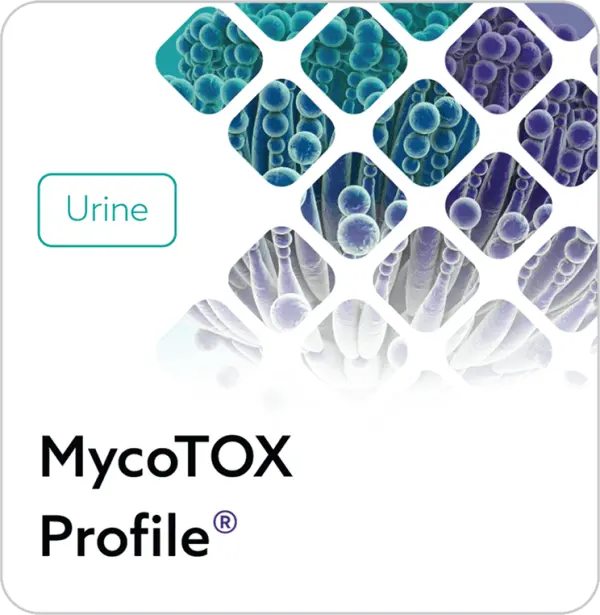
MycoTOX Profile® – a leading mold profile that detects 11 harmful mycotoxins from mold exposure, often missed in traditional testing.
Exposure to molds can negatively impact health either directly through inhalation or dermal contact with mold or mold spores – or indirectly due to the concomitant presence of their secondary metabolites, mycotoxins. Symptoms and disease states associated with mycotoxin exposure include the following:
Mycotoxins, produced by certain mold species, are some of the most prevalent toxins and can come from many sources, including buildings, vehicles, and food. These compounds have been recognized as a growing global health concern due to their acute and chronic adverse health impacts. Mycotoxin exposure can be challenging to diagnose without proper testing due to vague and often varied symptoms.
The MycoTOX Profile® is Mosaic Diagnostics’ most comprehensive assessment of mycotoxins. Our state-of-the-art urine-based assay accurately assesses levels of 11 different mycotoxins, including Aflatoxin M1, Ochratoxin A, Zearalenone, and Trichothecenes. The MycoTOX Profile® has been designed to help clinicians uncover mycotoxin exposure and guide a therapeutic strategy for prevention and treatment.

Mycotoxins cause adverse health effects that may be acute and chronic in nature that can manifest in various and ambiguous symptoms, the degree of impact can vary depending on the age, sex, genetics, and underlying health status of the exposed individual, as well as the duration and dose magnitude of the offending substance and their synergistic effects with other mycotoxins. Providers assessing symptomatic patients with known mold exposure or with an environmental history concerning mold exposure, will also need to consider the concomitant presence of mycotoxins and their potential negative health impacts as proper testing is essential for accurate treatment. The MycoTOX Profile® is specifically designed to help healthcare practitioners identify mycotoxin exposure and guide a targeted prevention and treatment plan.
Common routes of exposure include inhalation, dermal contact, and ingestion via commonly contaminated food sources (corn, cereals, ground and tree nuts, spices, dried fruits, apples, coffee, meat, milk, and eggs). Mold contamination can also affect nearly all indoor materials, including drywall, paint, wallpaper, carpeting, and more, posing various routes of exposure. When excessive moisture is present in high-humidity geographic areas or water-damaged buildings, the growth of these biological agents in damp environments leads to the production of spores, cells, fragments, and volatile organic compounds, which have been linked to a wide range of health hazards.
The MycoTOX Profile® utilizes state-of-the-art liquid chromatography tandem mass spectrometry (LC-MS/MS) technology to ensure high specificity (or fewer false positive results) and capture free (unconjugated) mycotoxin presence even at low levels. This is crucial, as mycotoxins, even at low levels of exposure, can cause serious health problems. Our test is so sensitive that we can detect amounts of many compounds in parts per trillion (ppt). To account for variations in fluid intake, we utilize creatinine correction to ensure accurate and reliable results. By employing LC-MS/MS technology, we can precisely identify all our analytes, reducing the risk of false positives. With the MycoTOX Profile® you can trust that you are receiving the most accurate and reliable results possible.

Below is a list of all analytes included in the test along with a brief description.
Aflatoxins: AFM1
An aflatoxin of concern, AFM1, is a hydroxylated metabolite of AFB1 and is secreted in the milk of both humans and animals.
Ochratoxins: Ochratoxin A
Ochratoxin A (OTA) which is the most prevalent, toxic, and clinically relevant fungal toxin of this mycotoxin group. While it has been associated with numerous negative health impacts, the kidney has been noted to be its main target organ – and studies indicate its association with nephrotoxicity in humans and animals.
Trichothecenes: Roridin E (ROE), Verrucarin A (VRA)
Tricothecenes are extremely potent inhibitors of protein synthesis and have been described to have wide-ranging negative systemic effects including immunotoxicity (immunosuppression), gastrointestinal toxicity, neurotoxicity, and dermatologic manifestations.
Zearalenone: Zearalenone
The main toxic effect of Zearalenone relates to its endocrine disruptive capabilities and as such, resultant negative reproductive effects in humans and animals.
Chaetoglobosin (CHA)
Chaetomium globosum is frequently isolated from materials found in water-damaged buildings – and is often referred to as ‘black mold.’
Enniatin B (ENB)
ENB has been shown to have endocrine disrupting properties as well as the ability to cross the blood brain barrier in in-vitro assays.
Gliotoxin (GTX)
Airborne Aspergillus fungal spores are ubiquitous in many environments, making potential exposure to gliotoxin common. Gliotoxins have been found on linoleum flooring and wallpaper in water damaged buildings, as well as silage and other animal food stocks.
Mycophenolic Acid (MPA)
MPA is used as an immunosuppressive drug for the prevention of transplant rejection in the form of sodium mycophenolate (Myfortic™, Novartis) and a pro-drug, mycophenolate mofetil (CellCept™, Roche) – and as a result, its levels may be elevated on diagnostics in patients using these pharmaceuticals.
Sterigmatocystin (STC)
Sterigmatocystin is a precursor of aflatoxin B1 in fungi capable of producing aflatoxins. Despite the similarity of chemical structure of these two mycotoxins, Sterigmatocystin has been noted to be a less potent carcinogen than Aflatoxin B1 (AFB1). It is classified as a Group 2B carcinogen by the International Agency for Research on Cancer.
Citrinin (CTN)
Exposure to CTN has been linked to the development of nephropathy, which is caused by CTN’s ability to increase the permeability of mitochondrial membranes in the kidneys. Rat studies have demonstrated that CTN is carcinogenic. Furthermore, several studies have linked exposure to CTN with a suppression of the immune response.
MosaicDX offers pediatric collection bags with adhesive tape for pediatric patients who have not been toilet trained. These bags can be used to collect urine from infants or young children.
Please refer to your test’s specific Test Preparation and Instructions for more information regarding the potential effects of medications, foods, and supplements on this test. Please consult your healthcare provider prior to making any changes to your medications.
Mycotoxins are low molecular weight, secondary metabolites of fungal (mold) compounds which are increasingly recognized as a global health threat given their role in precipitating both acute and chronic adverse health outcomes.
Acute mycotoxin effects are characterized by rapid onset and toxic response in the target organ most affected by the offending agent.
As an example, consumption of large doses of aflatoxins can result in life-threatening, acute poisoning (aflatoxicosis) due to detrimental impact on the liver.
Acute mycotoxin effects are more frequently observed in economically poorer global areas where sub-optimal food cultivation, harvesting, and storage practices are common; malnutrition is a constant presence; and a poor regulatory environment exists.
Chronic mycotoxin effects are characterized by lower exposure doses over longer periods of time – and symptoms attributed to chronic mycotoxin exposure are wide-ranging in their impact on an array of physiologic systems and functions.
Currently, there are no established guidelines for retesting mycotoxins after intervention. However, some healthcare providers recommend retesting at 3-6 months, 12 months, and annually as part of a wellness screen. Individuals with severe mold and mycotoxin-related illnesses may require more frequent testing.

Freehold, NJ, US


Please email us at the address below if you have any questions or comments.
[email protected]Copyright 2026 The Dust Test, All rights reserved.